Latch needles: how they work and how to specify them
What a latch needle does, which dimensions decide the match, and what to send when the code has worn off.
What a latch needle does
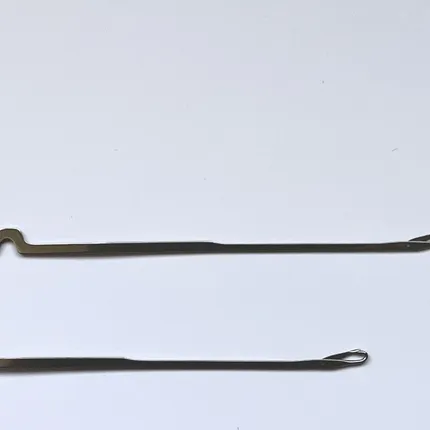
A latch needle is the most common needle type in industrial knitting. The hook at the tip catches the yarn, the latch closes the hook as the needle passes the old loop, and the new loop is drawn through. The butt at the other end follows the cam track and controls the needle's movement.
The parts that matter when ordering
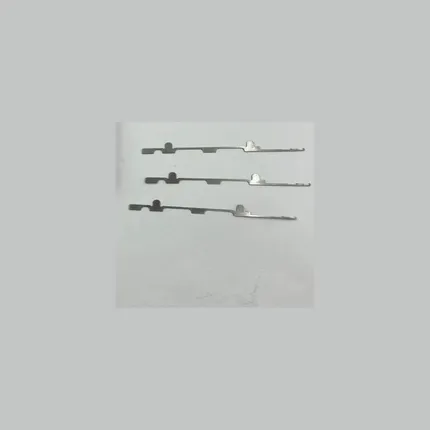
Four features decide whether a needle will run on your machine: the hook and latch profile, the butt position and shape, the needle length, and the gauge. Two needles can look similar in a photograph and still differ by a few tenths of a millimetre in the butt.
Gauge and needle selection
Gauge is the number of needles per inch on the machine. A 14G machine needs 14G needles; using a needle from a different gauge damages the needle and the cam box. Always quote the gauge with the machine model.
What to send for a match
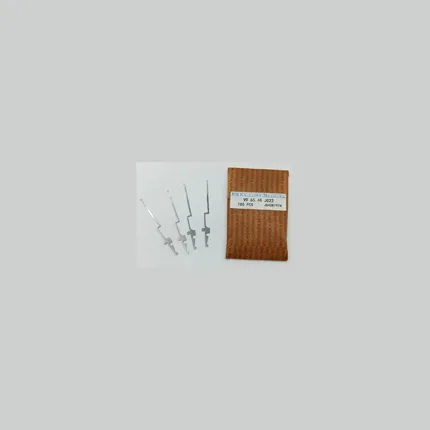
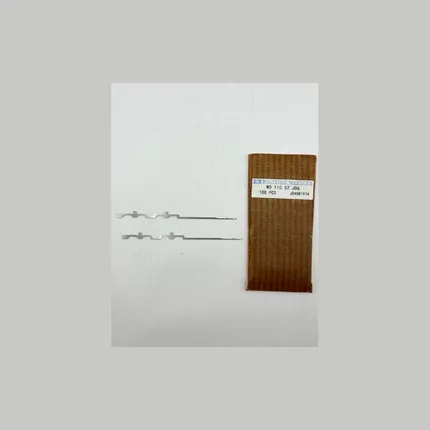
Send the code from the needle or box, the machine make and model, the gauge, and a photo of the needle profile if the code is unreadable. For sinkers and jacks, add the thickness or the stamped part number.
Where latch needles are used
Latch needles are used across circular, flat and sock knitting machines. The same basic mechanism is scaled from fine-gauge hosiery needles to heavier gauge flat machine needles; the hook, latch and butt dimensions change with the machine.
Send the needle code. We will confirm the match.
Include the machine make, model and gauge with the code, and we will quote the quantity you need.